Kerbal Space Program (KSP) is a spaceflight simulation game that combines realistic physics with playful presentation. While its green astronauts and humorous tone make it approachable, the underlying mechanics are complex and deeply rooted in real orbital physics. Success in KSP depends on understanding engineering principles, planning missions carefully, and learning from inevitable failures.
This guide is structured to help new and intermediate players progress logically—from basic rocket construction to interplanetary exploration. By following these tips and guides, players can reduce frustration, improve mission success rates, and fully enjoy the creative and scientific depth of Kerbal Space Program.
1. Understanding Core Physics and Orbital Mechanics
Gravity and Motion Fundamentals
KSP is built on Newtonian physics. Rockets move according to thrust, mass, and gravity rather than scripted paths. Understanding that orbits are sideways motion, not upward flight, is essential.
Thinking in terms of velocity instead of altitude helps players plan efficient launches and maneuvers.
Orbits as Continuous Falling
An orbit is essentially constant free-fall around a body. Increasing horizontal speed raises orbit height, while vertical thrust mainly fights gravity.
This concept is the foundation of all successful spaceflight in KSP.
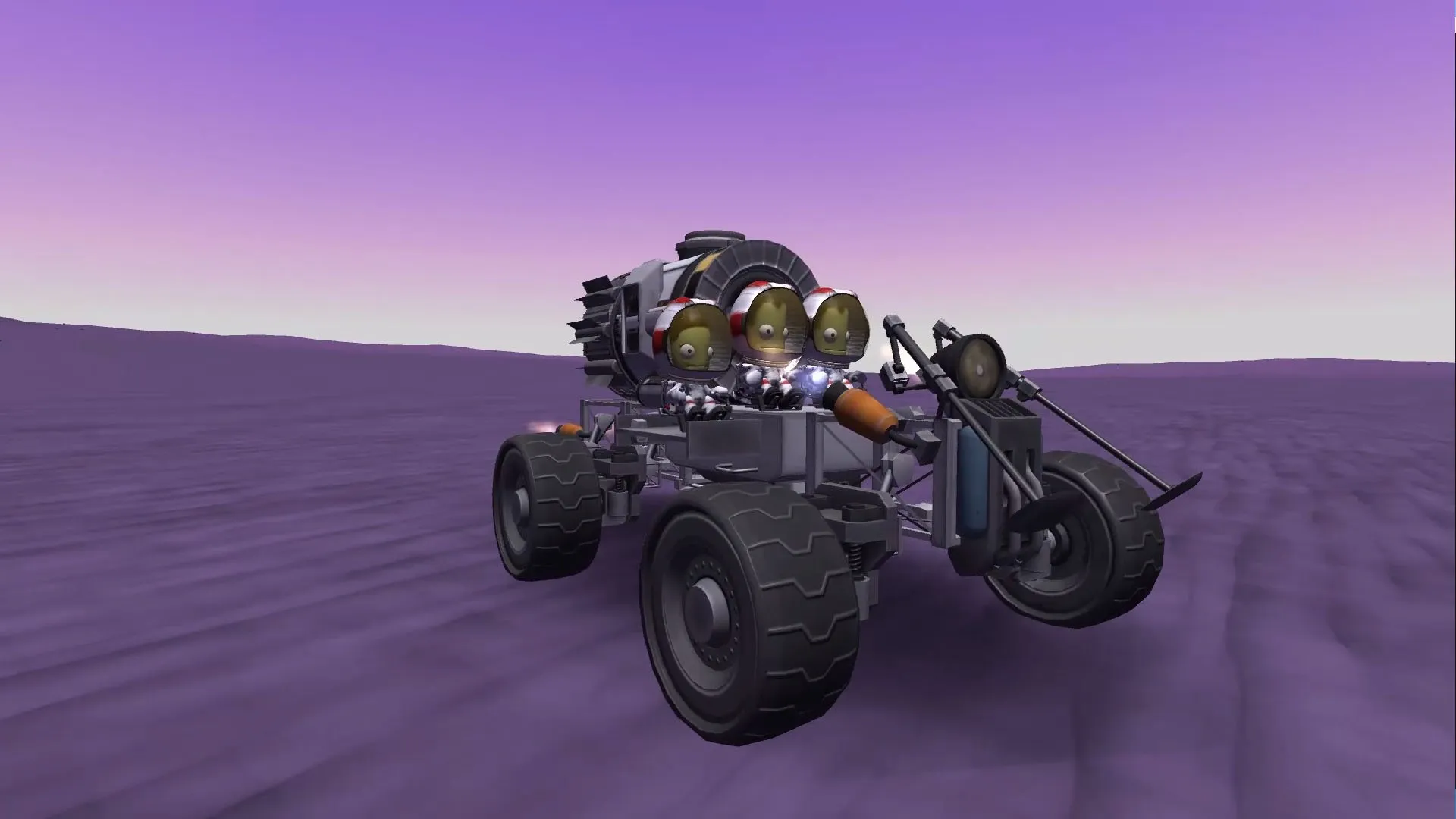
2. Starting with the Right Game Mode
Career, Science, or Sandbox
New players should begin with Science mode. It introduces progression without financial pressure, allowing experimentation and learning.
Career mode adds budget and reputation management, while Sandbox removes restrictions entirely.
Learning Without Punishment
Science mode encourages exploration and testing. Failures cost time, not funds, making it ideal for mastering mechanics.
Choosing the right mode improves early learning significantly.
3. Building Stable Rockets
Center of Mass and Thrust Alignment
A rocket flies straight when thrust passes through its center of mass. Misalignment causes spinning and loss of control.
Symmetry tools help maintain balance and stability.
Structural Integrity Matters
Tall rockets require struts and proper staging. Wobbling is a sign of weak connections, not insufficient power.
Structural planning is as important as engine selection.
4. Efficient Launch and Ascent Profiles
Gravity Turn Basics
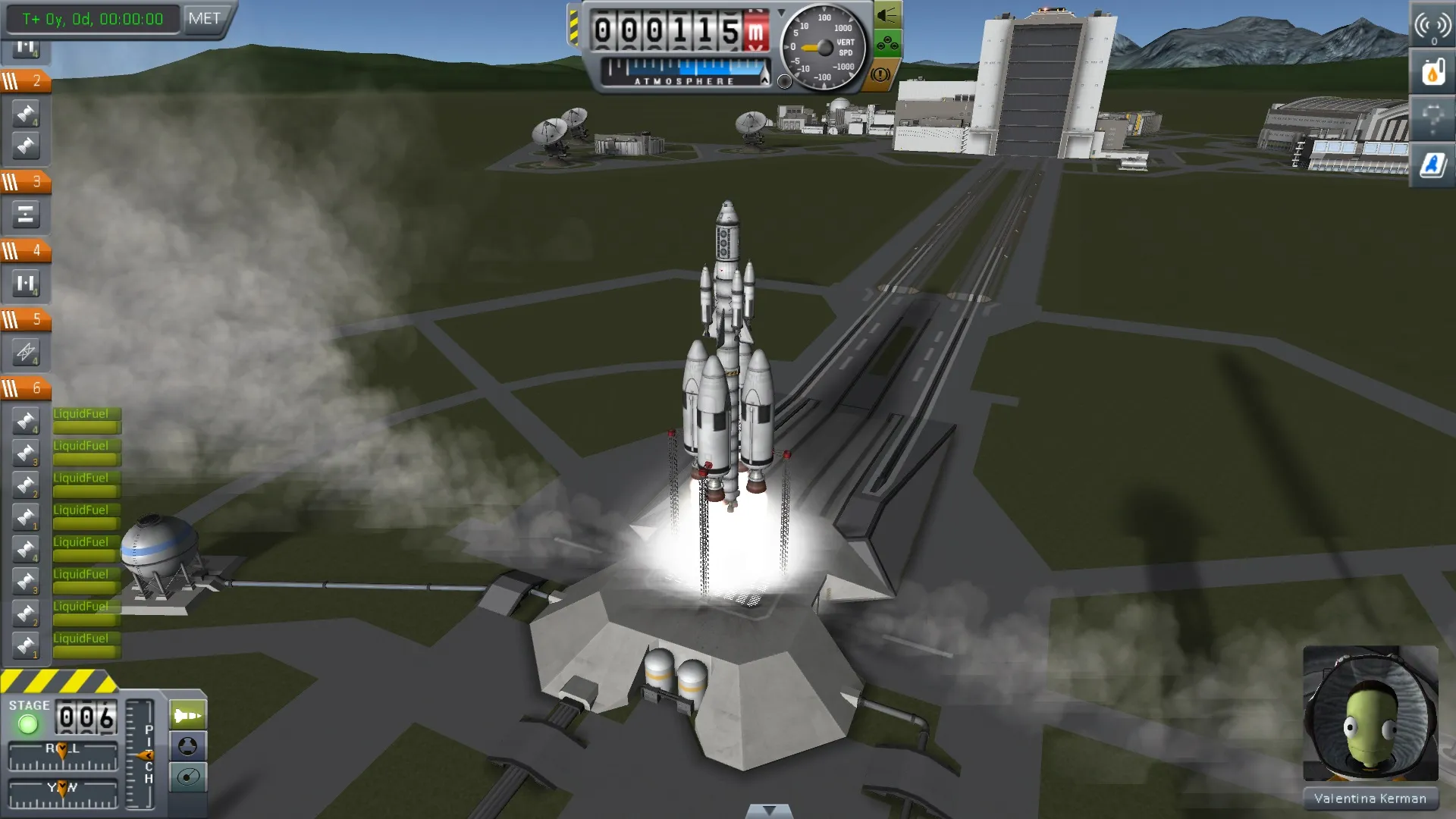
A gravity turn gradually tilts the rocket during ascent, using gravity to shape the trajectory efficiently.
Starting the turn early reduces fuel waste.
Avoiding Overcorrection
Small adjustments are better than aggressive steering. Overcorrection increases drag and instability.
Smooth control leads to reliable orbit insertion.
5. Managing Fuel, Staging, and Delta-V
Understanding Delta-V
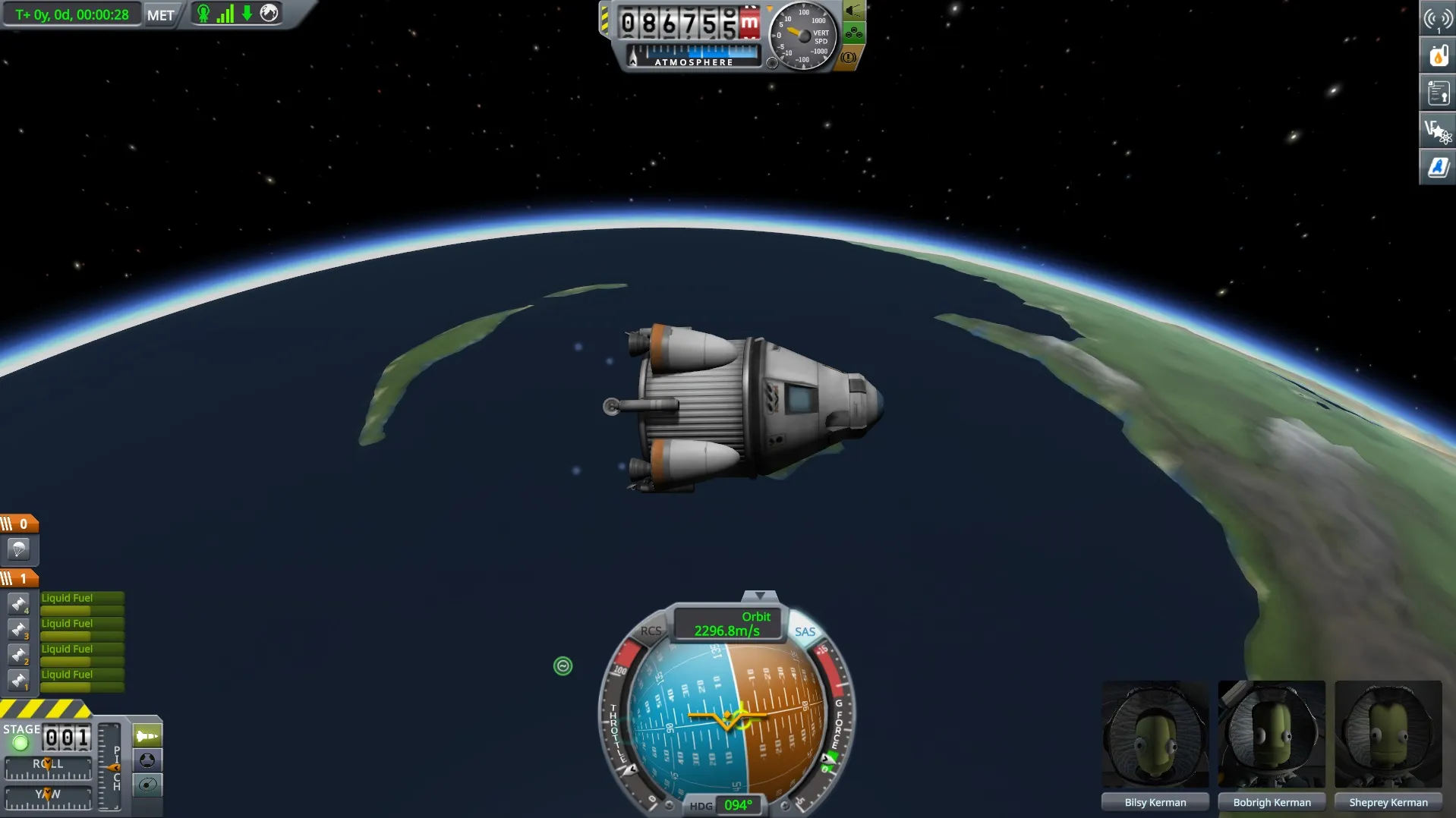
Delta-V represents how much velocity change your spacecraft can achieve. Every maneuver consumes delta-V.
Planning missions around delta-V requirements prevents stranded spacecraft.
Smart Staging Design
Dropping empty tanks and engines reduces mass and improves efficiency.
Well-designed staging is the key to reaching orbit with limited parts.
6. Learning Orbital Maneuvers
Maneuver Nodes Explained
Maneuver nodes allow precise planning of burns. Prograde, retrograde, and normal vectors control orbit shape.
Learning node adjustments improves accuracy.
Timing and Execution
Burns should be centered on maneuver nodes. Long burns require starting early to maintain precision.
Practice improves intuition and efficiency.
7. Docking and Rendezvous Techniques
Matching Orbits First
Docking begins with matching orbits, not approaching directly. Relative velocity must be minimized.
Patience is essential during rendezvous.
Fine Control and Alignment
Using low thrust and fine control inputs helps prevent collisions.
Docking is a skill developed through repetition, not speed.
8. Exploring the Mun, Minmus, and Beyond
First Celestial Targets
The Mun and Minmus are ideal training grounds. They teach landing, takeoff, and return missions.
Minmus offers forgiving gravity and high science rewards.
Planning Interplanetary Missions
Interplanetary travel requires transfer windows and precise burns. Rushing leads to mission failure.
Preparation determines success beyond Kerbin.
9. Science Collection and Progression
Maximizing Science Returns
Running experiments in multiple situations increases science yield.
Recovering experiments safely accelerates progression.
Using Probes vs Crewed Missions
Probes are cheaper and safer for early exploration. Crewed missions provide flexibility and recovery benefits.
Choosing the right approach improves efficiency.
10. Learning from Failure and Iteration
Failure Is the Teacher
Explosions, crashes, and stranded Kerbals are learning opportunities. Each failure reveals design flaws or planning errors.
Iteration is the core gameplay loop.
Refining Designs Over Time
Improvement comes from small changes. Adjust thrust, mass, or staging gradually.
Mastery emerges through persistence and curiosity.
Conclusion
Kerbal Space Program transforms real-world physics into an engaging, creative sandbox where learning and experimentation drive progress. Its steep learning curve is balanced by freedom, humor, and a deep sense of accomplishment.
By following these tips and guides, players can build reliable rockets, explore distant worlds, and gain confidence in orbital mechanics. In KSP, success is not avoiding failure—it is learning from it.