





Monster Hunter Wilds represents one of the most ambitious leaps Capcom has ever taken with the franchise. For the first time, the world itself is not merely a stage for the hunt but an active, shifting participant. Vast seamless maps, migrating ecosystems, and large-scale dynamic weather systems redefine what a hunt looks and feels like. Storms form naturally, climates collide, and environments evolve in real time as monsters roam freely.
Yet within this ambition lies a subtle but deeply impactful problem: dynamic weather in Monster Hunter Wilds frequently disrupts combat readability, undermining one of the series’ most sacred design principles. Monster Hunter has always thrived on clarity—clear animations, readable tells, consistent hitboxes, and player mastery through observation. When weather begins to obscure these signals, difficulty no longer feels earned; it feels imposed.
This article examines one specific issue in depth: how dynamic weather systems interfere with combat readability over the course of a hunt, from early encounters to endgame challenges, and how this alters player decision-making, skill expression, and emotional engagement.
1. The Original Contract Between Hunter and Monster
Monster Hunter’s combat philosophy has always been built on a clear contract: if you observe carefully, you will survive.
Every monster telegraphs its intentions through:
- Body posture
- Animation wind-ups
- Audio cues
- Environmental interactions
This contract allows hunters to learn through failure and refine their skills over time.
H3: Readability as Skill Expression
Skill in Monster Hunter is not reflex-based chaos. It is pattern recognition and disciplined response.
H4: Why This Matters in Wilds
When external systems interfere with this clarity, the core skill loop breaks down—not because the player lacks ability, but because information is lost.
2. Weather as a System, Not a Modifier
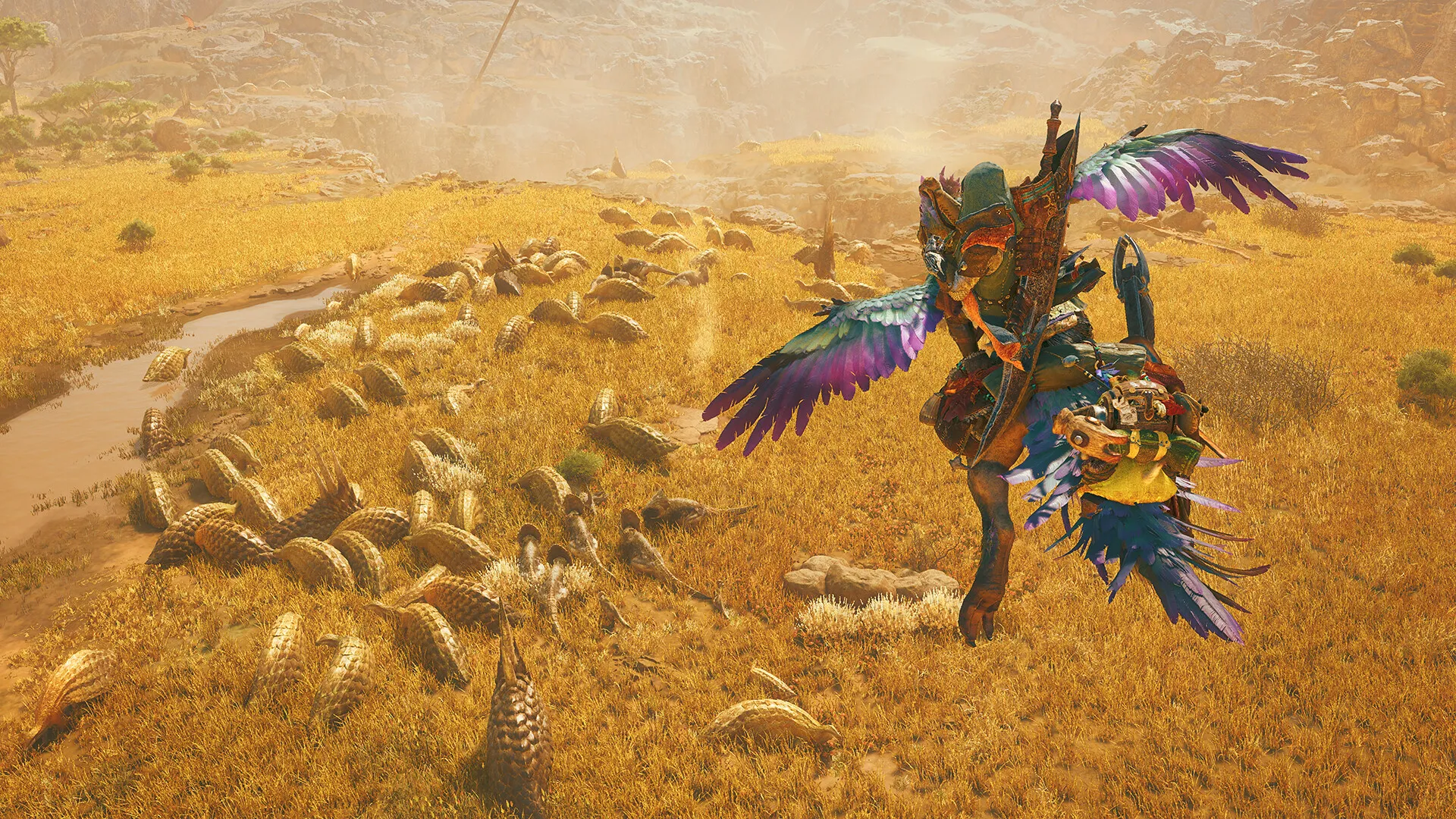
In Monster Hunter Wilds, weather is no longer a cosmetic layer. It is systemic.
Storms influence:
- Visibility
- Sound propagation
- Elemental scaling
- Terrain friction
- Monster aggression states
H3: Intended Immersion
Capcom’s intent is clear: the world should feel alive and hostile.
H4: The Core Conflict
However, weather systems overlap with combat systems instead of integrating cleanly, creating moments where players cannot clearly understand why they failed.
3. Early Hunts: When Weather Feels Exciting, Not Punishing
In early hunts, weather effects are restrained. Light rain, mild wind, and distant thunder enhance atmosphere without obstructing combat.
Players still see:
- Full monster silhouettes
- Clear attack wind-ups
- Consistent terrain behavior
H3: Controlled Exposure
Early monsters are slower, and their attacks are forgiving.
H4: A False Sense of Security
Players assume weather will remain an atmospheric flourish rather than a mechanical burden.
4. Mid-Game Storms and the Collapse of Visual Clarity
As players progress, storms intensify. Sandstorms reduce draw distance. Heavy rain floods screens with particles. Fog flattens depth perception.
H3: Loss of Animation Readability
Many monster attacks rely on subtle animation cues:
- Shoulder rotation
- Tail tension
- Leg bracing
These are often obscured by weather effects.
H4: Reaction Becomes Guesswork
When players can no longer see tells, reaction shifts from skill-based timing to panic dodging.
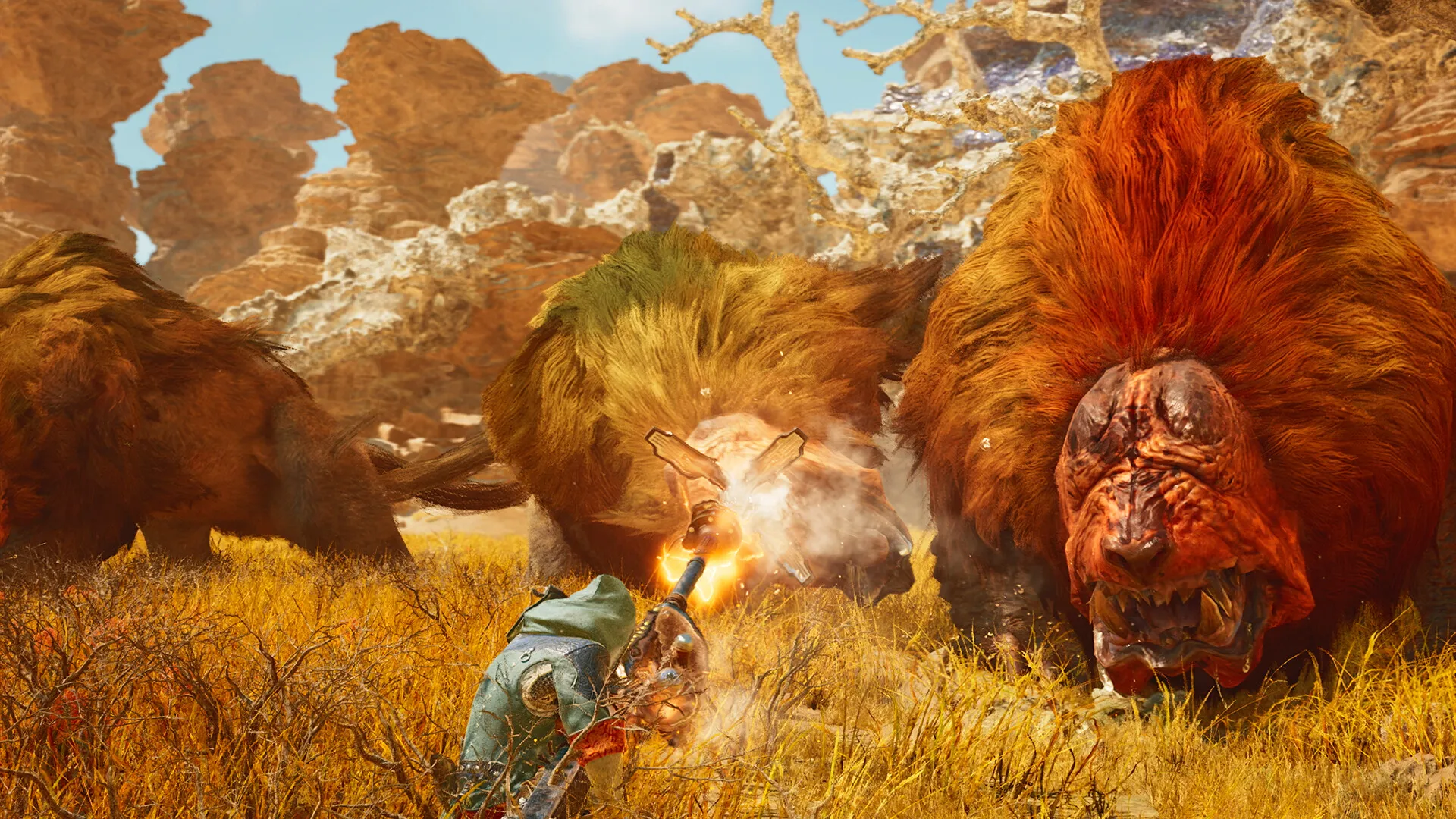
5. Audio Overload and the Failure of Sound-Based Learning
Monster Hunter traditionally allows players to rely on audio when visuals fail.
In Wilds, weather audio competes aggressively with monster sounds.
H3: Competing Audio Channels
Thunder, wind, rain, and sand all occupy high-priority sound layers.
H4: Lost Warnings
Roars, footfalls, wing beats, and charge cues are often delayed or muted entirely, removing a critical fallback tool for experienced hunters.
6. Terrain Transformation and Muscle Memory Betrayal
Weather alters terrain dynamically:
- Rain creates mud
- Snow hardens into ice
- Floods reshape movement paths
H3: Inconsistent Movement Feedback
Dodges that worked seconds earlier suddenly fail due to friction changes.
H4: Why This Feels Unfair
The game rarely communicates when terrain state changes, forcing players to relearn spacing mid-combat.
7. Elemental Scaling Without Transparency
Weather amplifies or suppresses elemental damage:
- Lightning storms boost thunder
- Rain weakens fire
- Heatwaves drain stamina faster
H3: Hidden Math
These modifiers are rarely surfaced through UI or feedback.
H4: Strategic Confusion
Players cannot adapt loadouts or tactics when they don’t understand why damage output suddenly changes.
8. Monster Behavior Shifts Triggered by Weather
Some monsters unlock new behaviors or aggression states during storms.
H3: Weather-Based Rage States
Attack chains become longer, recovery windows shrink, and flinches are ignored.
H4: Lack of Signposting
These changes often occur without visual or audio indicators, making monsters feel inconsistent rather than adaptive.
9. Player Psychology: From Mastery to Survival Anxiety
As information clarity drops, player behavior changes.
H3: Defensive Overcorrection
Players:
- Overheal
- Disengage frequently
- Avoid aggressive play
H4: Loss of Satisfaction
Victories feel like endurance tests rather than demonstrations of skill.
10. The Long-Term Cost to the Monster Hunter Identity
Monster Hunter Wilds is bold, immersive, and ambitious—but weather-induced readability loss threatens the series’ foundation.
H3: A World Too Alive
When the environment competes with combat systems, the hunter’s agency diminishes.
H4: Where Balance Is Needed
Weather should enhance tactical choice, not obscure fundamental feedback loops.
Monster Hunter Wilds pushes the franchise forward in remarkable ways, transforming the environment into a living force that shapes every hunt. Yet this ambition comes at a cost. By allowing dynamic weather to interfere too deeply with visual clarity, audio cues, terrain consistency, and elemental feedback, the game undermines the clarity that has defined Monster Hunter for two decades.
The issue is not difficulty, nor realism, nor complexity—it is communication. When players fail, they must understand why. When storms erase that understanding, mastery gives way to frustration. Monster Hunter Wilds remains a powerful evolution of the series, but its weather systems reveal the delicate balance between immersion and readability—a balance that, at times, tips too far into chaos.