Subnautica and the Mid-Game Resource Wall: How Progression Bottlenecks Disrupt Player Immersion
Introduction
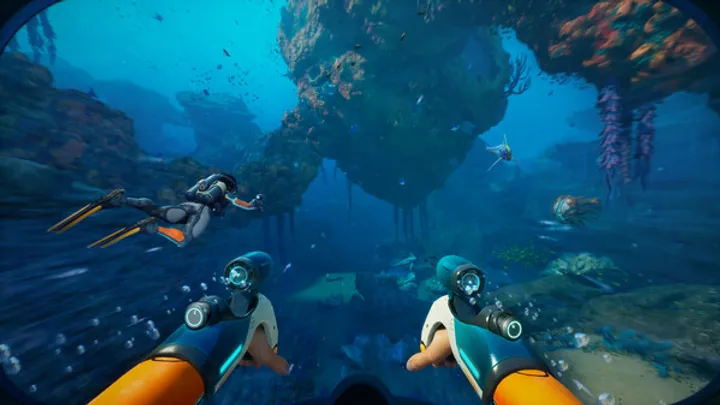
Subnautica is widely praised as one of the most immersive survival exploration games ever created. Its alien oceans, environmental storytelling, and layered crafting progression create a powerful sense of wonder and discovery. From the first crash landing in the Safe Shallows to the terrifying descent into the Lost River, the game masterfully balances fear, curiosity, and survival mechanics.
However, beneath its beautifully crafted world lies a specific progression issue that many players encounter during extended play: the mid-game resource wall. Unlike early survival tension or late-game story gating, this bottleneck emerges unexpectedly, slowing momentum and disrupting immersion. This article explores in depth how Subnautica’s mid-game resource design creates friction, why it happens, and how it affects pacing, exploration flow, and player psychology.
Phase 1: Early Survival Harmony (Crash Landing to Seamoth)
The opening hours of Subnautica are nearly flawless in pacing. Players gather titanium, copper, and quartz while learning oxygen management and basic crafting. Every small upgrade feels meaningful.
Resources are close to spawn zones. Blueprints unlock at a steady rhythm. The game rewards curiosity with immediate progression.
Why the Early Loop Feels Balanced
The early game succeeds because:
- Materials are visible and abundant
- Crafting costs remain manageable
- Exploration directly leads to upgrades
- Biomes escalate gradually in danger
There is minimal grinding. Every trip outside the lifepod produces tangible advancement.
Blueprint Discovery and Momentum
Fragments for the Seaglide and Seamoth are strategically placed in accessible biomes. This ensures players feel guided without being railroaded. The crafting loop reinforces exploration rather than replacing it.
Momentum builds naturally — until the mid-game shift begins.
 Phase 2: The Depth Transition Barrier (Seamoth to Cyclops Stage)
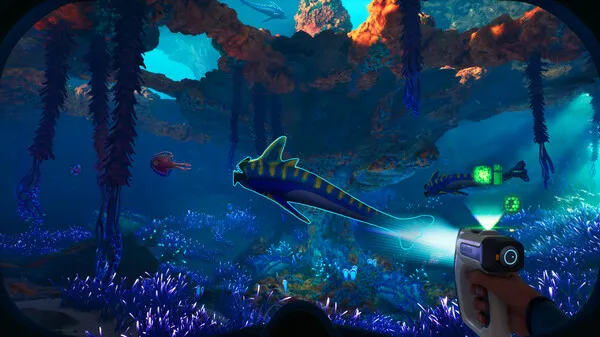
Once players aim for deeper exploration, the difficulty shifts from survival tension to logistical strain.
The Seamoth provides limited depth upgrades. To go deeper, players must invest in advanced materials like:
- Lithium
- Magnetite
- Rubies
- Gel Sacks
- Crystalline Sulfur
These materials are not simply harder to gather — they are biome-locked and risk-gated.
The Sudden Resource Scatter
Unlike early materials, mid-tier resources are:
- Located far from safe spawn zones
- Found in dangerous or low-visibility biomes
- Required in larger quantities
The player’s progression shifts from discovery-driven to checklist-driven.
Psychological Impact
This creates the first immersion break. Instead of thinking:
“I wonder what’s down there.”
Players begin thinking:
“I need three more lithium before I can continue.”
Exploration transforms into procurement.
Phase 3: The Vehicle Upgrade Dependency Loop
The Cyclops and Prawn Suit represent major mid-game milestones. However, acquiring them exposes the resource wall fully.
Blueprint Fragment Friction
Fragments for advanced vehicles are distributed across multiple biomes, often requiring revisits. This introduces repetition into what was previously organic exploration.
Players may:
- Search wrecks repeatedly
- Travel long distances for missing fragments
- Backtrack frequently
Exponential Crafting Costs
Advanced components require sub-components. For example:
- Plasteel ingots require lithium
- Advanced wiring kits require gold and computer chips
- Depth modules require rare materials
The crafting tree grows vertically instead of horizontally. One missing item halts everything.
This dependency stacking slows progression dramatically.
Phase 4: The Lost River Bottleneck
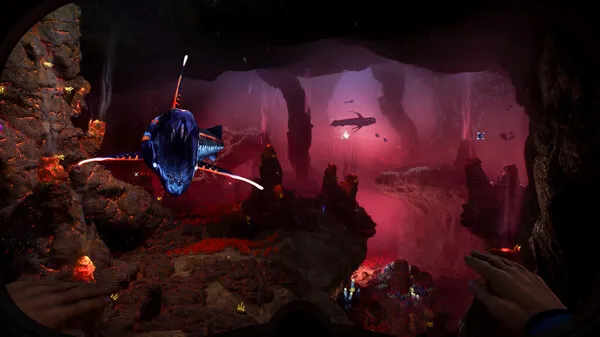
The Lost River is one of Subnautica’s most visually stunning biomes. It is also where the resource wall becomes most obvious.
Risk vs Reward Imbalance
To progress the main storyline, players must gather:
- Nickel ore
- Crystalline sulfur
- Kyanite (later in deeper zones)
These are found in hostile, labyrinth-like environments with limited safe zones.
The risk spikes sharply, but the tools required to mitigate risk are gated behind those very materials.
The Chicken-and-Egg Problem
Players need better depth modules and vehicle durability to explore safely.
But they need deep biome resources to craft those upgrades.
This creates a loop where:
- The player is underpowered
- The biome is hostile
- Retreat is frequent
Instead of tension, frustration begins to dominate.
Phase 5: Inventory and Storage Constraints
Another overlooked contributor to the resource wall is storage limitation.
Limited Carry Capacity
Before fully upgrading bases and vehicles, players struggle with:
- Small inventory size
- Limited Cyclops storage modules
- Base construction costs
Gathering rare materials often requires multiple trips, increasing exposure to danger and extending grind time.
Travel Time Inflation
Mid-game biomes are far from early safe zones. Travel becomes time-consuming.
What once felt like an exciting expedition becomes logistical repetition.
Phase 6: Energy Management Pressure
Mid-game progression introduces power strain.
Base Energy Consumption
Water filtration systems, scanners, and battery chargers consume large amounts of energy. Players must gather:
- Magnetite for thermal plants
- Advanced materials for nuclear reactors
Without reliable power, crafting slows further.
Vehicle Power Anxiety
The Cyclops and Prawn Suit consume power rapidly in dangerous zones. Running out of power deep underwater creates forced retreat scenarios.
This adds another layer of dependency to already scarce resources.
 Phase 7: Narrative Pacing Disruption
Subnautica’s storytelling thrives on environmental immersion.
However, the resource wall disrupts narrative flow.
Story vs Grind Conflict
Radio messages and alien clues suggest urgency.
But the player may spend hours gathering lithium instead of pursuing the mystery.
This tension between narrative urgency and mechanical delay creates pacing dissonance.
Emotional Shift
The early game evokes wonder and fear.
The mid-game wall evokes obligation and checklist behavior.
Immersion weakens.
Phase 8: Comparison to Other Survival Games
Many survival games face progression bottlenecks, but their handling differs.
Linear Tech Trees
Games like Raft scale resource availability with biome progression more smoothly. Materials gradually replace earlier tiers.
Clear Tier Zones
Some survival games visually signal resource progression zones more clearly. Subnautica’s biome blending sometimes obscures this clarity.
Subnautica’s strength — organic world design — ironically contributes to its resource confusion.
Phase 9: Why the Wall Exists
The mid-game bottleneck is not accidental.
Design Intent
Possible reasons include:
- Encouraging base expansion
- Forcing biome mastery
- Extending total playtime
- Increasing perceived depth and scale
The issue lies not in difficulty, but in pacing balance.
Artificial vs Organic Challenge
Organic challenge:
You fail because of mistakes.
Artificial bottleneck:
You stall because of resource distribution imbalance.
The mid-game wall leans toward the latter.
Phase 10: Potential Solutions for Better Flow
Subnautica remains an exceptional game. The issue is specific and solvable.
Design Adjustments
- Slightly increase mid-tier resource density
- Reduce crafting chain depth
- Provide earlier depth module alternatives
- Expand early storage options
Preserve Tension, Reduce Friction
The goal is not to make the game easier.
It is to ensure exploration remains discovery-driven rather than procurement-driven.
Subnautica shines when players explore out of curiosity, not necessity.
Conclusion
Subnautica is a masterpiece of environmental storytelling and survival design. Its oceans feel alive, mysterious, and dangerous in all the right ways. The early hours represent some of the best progression pacing in modern survival games.
Yet the mid-game resource wall creates a noticeable disruption in that carefully crafted immersion. Biome-locked materials, layered crafting dependencies, storage limits, and power management strain converge into a bottleneck that shifts exploration into obligation.
The game does not fail — it slows. And in a world built on momentum and wonder, slowing down can feel like losing magic.
By refining resource distribution and reducing dependency stacking, Subnautica could preserve its tension while restoring flow. Until then, the mid-game resource wall remains one of the most significant pacing challenges in an otherwise extraordinary underwater survival experience.